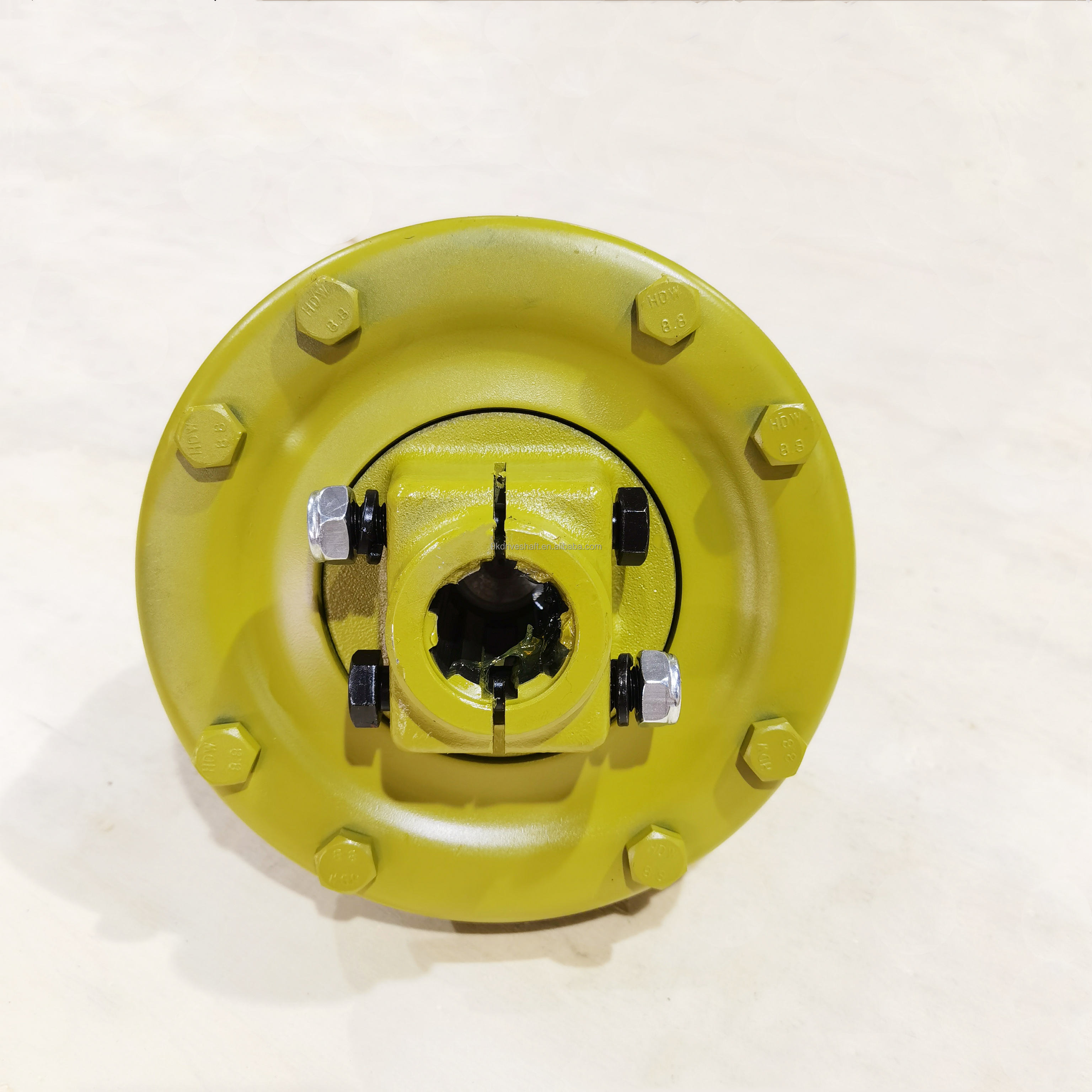

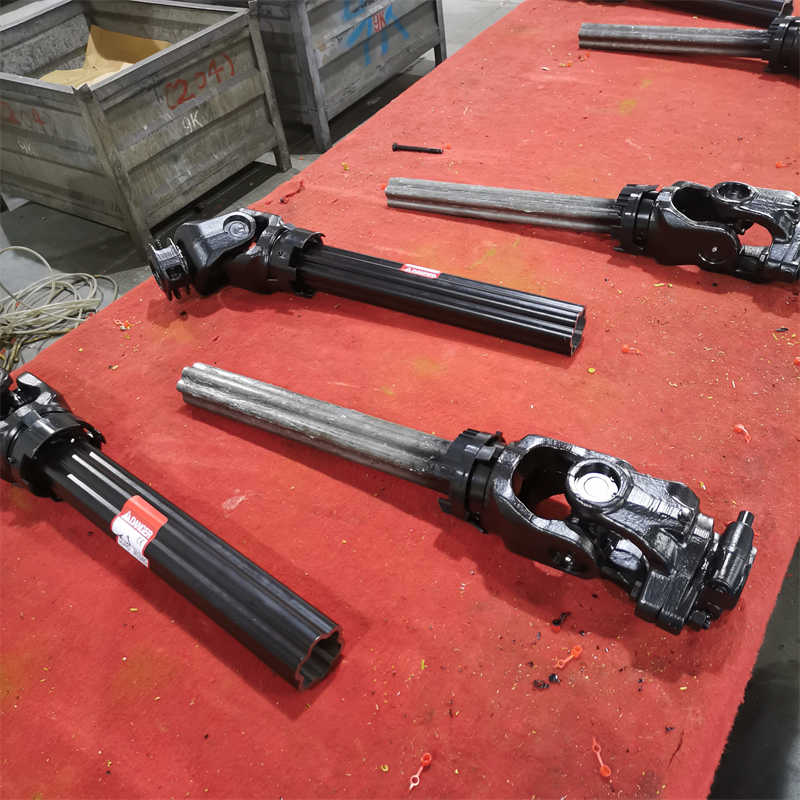
 Tubes illustration for industrial applications" style="width:100%; height:auto; margin:20px 0; border-radius:8px;">
What are tubes commonly used for in industrial applications? This is a fundamental question for procurement specialists managing complex supply chains. Far beyond simple fluid transport, industrial tubes are the vital arteries of modern manufacturing, construction, and energy sectors. They withstand immense pressure, convey aggressive chemicals, manage thermal energy, and provide structural integrity in machinery. Selecting the right tube – considering material, diameter, wall thickness, and tolerance – is a critical decision impacting operational safety, efficiency, and long-term maintenance costs. This guide delves into the core industrial uses of tubes, addresses common procurement challenges, and highlights how precision-engineered solutions from Raydafon Technology Group Co.,Limited ensure reliability and performance in demanding environments.
Procurement managers in chemical and petrochemical plants face a constant battle against two silent killers: high internal pressure and corrosive media. A standard tube might handle one stressor, but the combination leads to catastrophic failures—leaks, ruptures, and unplanned shutdowns that cost millions in lost production and environmental remediation. The solution lies in specifying tubes engineered for this exact challenge. Seamless stainless steel or alloy tubes, with precisely controlled wall thickness and superior metallurgy, resist both mechanical stress and chemical attack. For critical applications involving highly corrosive substances or extreme pressures, Raydafon Technology Group Co.,Limited provides tubes that undergo rigorous non-destructive testing (NDT) and are certified to international standards like ASTM A269 or ASME SA213, ensuring integrity where it matters most.
| Key Parameter | Standard Grade | Raydafon High-Performance Grade |
|---|---|---|
| Material | 304 Stainless Steel | 316L, Duplex, Super Duplex, Inconel |
| Max Working Pressure | ~3000 psi | Up to 10,000+ psi (custom) |
| Corrosion Resistance (Pitting Resistance Equivalent Number - PREN) | ~19 | 25 to >40 |
| Certification | Mill Test Report | Full Traceability, NDT Reports (UT, Eddy Current), PED/ASME Certs |
In mobile hydraulics, construction equipment, and industrial automation, hydraulic tube performance directly dictates system responsiveness and uptime. Common pain points include fluid leakage from imperfect seals, pressure drops due to internal surface roughness, and vibration-induced fatigue at connection points. These issues lead to sluggish machine operation, loss of power, and frequent maintenance stops. The core of the problem often traces back to inconsistent tube dimensions (OD/ID tolerance), poor surface finish, and inadequate bending properties. Precision cold-drawn hydraulic tubing addresses these directly. Tubes from Raydafon are manufactured with exceptional dimensional accuracy and a smooth internal surface, minimizing friction and optimizing fluid flow. Their consistent quality ensures perfect seal engagement and superior fatigue resistance, directly translating to more reliable, efficient, and longer-lasting hydraulic systems.
| Performance Factor | Common Issue with Standard Tubing | Solution with Precision Hydraulic Tubing |
|---|---|---|
| Internal Surface Finish | Rough (Ra > 25 µin) | Ultra-Smooth (Ra < 15 µin) |
| Dimensional Tolerance (OD/ID) | Wide variance (±0.005" or more) | Tight, Consistent (±0.001" or better) |
| Bendability & Ovality | Cracking, excessive flattening | Excellent bend consistency, minimal ovality |
| System Impact | Leakage, pressure loss, heat generation | Optimized efficiency, reduced downtime, lower operating temps |
Beyond fluid conveyance, tubes serve as critical structural components and are the core of heat exchange systems. In structural applications, such as in machinery frames or architectural elements, tubes must provide high strength-to-weight ratio and consistent mechanical properties. In heat exchangers, the thermal conductivity, corrosion resistance, and fouling resistance of the tube material are paramount. A failure here means inefficient energy transfer, leading to higher fuel costs, or mechanical failure under load. For structural integrity, high-strength carbon steel or DOM (Drawn Over Mandrel) tubes offer superior concentricity and strength. For heat exchangers, materials like admiralty brass, cupronickel, or titanium tubes from specialists like Raydafon Technology Group Co.,Limited provide optimal thermal performance and longevity in specific environments, from power plant condensers to marine cooling systems.
| Application Type | Primary Tube Requirement | Recommended Material & Features |
|---|---|---|
| Structural Support / Roll Cages | High Yield Strength, Consistent Wall Thickness | DOM Steel Tubing, ASTM A513 |
| Shell & Tube Heat Exchanger | High Thermal Conductivity, Fouling Resistance | Copper Alloys (Admiralty Brass, CuNi 90/10), Titanium Gr. 2 |
| Boiler / Superheater Tubes | High-Temperature Creep Resistance | Alloy Steel (T11, T22, T91 per ASTM A213) |
Q1: What are tubes commonly used for in industrial applications, and how do I choose the right material?
A1: Industrial tubes are predominantly used for fluid and gas transport, hydraulic and pneumatic power systems, structural frameworks, and heat exchange. Material selection is the most critical step. It depends on the medium (water, oil, chemicals, steam), operating pressure and temperature, environmental conditions (risk of corrosion), and required mechanical strength. For general hydraulics, carbon steel (ST52) is common. For corrosive chemicals, stainless steel (304, 316) is essential. For high-temperature services, alloy steels (like chrome-moly) are used. Consulting with a technical specialist from Raydafon Technology Group Co.,Limited can help navigate material specifications like ASTM, DIN, or JIS standards to match your exact application needs.
Q2: What are tubes commonly used for in high-pressure scenarios, and what standards ensure their safety?
A2: In high-pressure applications such as hydraulic accumulators, gas cylinders, and boiler systems, tubes are used to contain and convey fluids under extreme force. Safety is non-negotiable. Tubes for these uses must be seamless (not welded) to eliminate weak points and manufactured to stringent international standards. Key standards include ASTM A519 for mechanical tubing, ASTM A269 for seamless stainless steel, and ASME SA213 for boiler tubes. These standards govern chemical composition, mechanical properties, heat treatment, and mandatory non-destructive testing. Suppliers like Raydafon provide full certification packages, ensuring every tube batch meets the required safety and performance benchmarks for critical high-pressure duties.
The question, "What are tubes commonly used for in industrial applications?" opens the door to a world of precision engineering where the right specification prevents downtime and ensures safety. From combating corrosion in a chemical plant to optimizing a hydraulic excavator's performance, the tube is a foundational component. Partnering with a supplier that understands these technical nuances is crucial for procurement success.
We invite you to share your specific challenges. Are you dealing with a recurring failure in a particular application? Do you need help interpreting a material specification for an upcoming project? Contact our engineering team to discuss how precision tubing can solve your operational challenges.
For reliable, specification-grade industrial tubing solutions, consider Raydafon Technology Group Co.,Limited. With a focus on quality certification and technical support for procurement professionals, Raydafon supplies a wide range of seamless, welded, hydraulic, and heat exchanger tubes for demanding global applications. For specific inquiries, please contact us at [email protected].
Mougin, J., & Rosso, M. (2005). High-temperature corrosion in waste incineration environments. *Materials Science Forum, 461-464*, 39-46.
Davis, J. R. (Ed.). (2001). *Alloying: Understanding the Basics*. ASM International.
Kleiner, M., Geiger, M., & Klaus, A. (2003). Manufacturing of lightweight components by metal forming. *CIRP Annals, 52*(2), 521-542.
Shah, R. K., & Sekulic, D. P. (2003). *Fundamentals of Heat Exchanger Design*. John Wiley & Sons.
ASM International Handbook Committee. (1990). *Properties and Selection: Irons, Steels, and High-Performance Alloys* (Vol. 1). ASM International.
Roberge, P. R. (2008). *Corrosion Engineering: Principles and Practice*. McGraw-Hill Education.
Nestor, C. W. (2006). Hydraulic system contamination control. *Fluid Power Handbook & Directory*, 320-335.
European Committee for Standardization. (2012). *EN 10305-1: Steel tubes for precision applications - Technical delivery conditions - Part 1: Seamless cold drawn tubes*.
Mori, K. I., & Bay, N. (2013). Cold forging of tubular components. *Journal of Materials Processing Technology, 213*(6), 961-968.
American Society of Mechanical Engineers. (2021). *ASME Boiler and Pressure Vessel Code, Section II - Materials, Part A - Ferrous Material Specifications*.
 Tubes
Tubes