
Imagine a maintenance supervisor at a food processing plant discovering that a rotating driveshaft near a packaging line has no protective cover. A near-miss incident occurred when a worker’s sleeve brushed against the spinning shaft. The plant manager immediately asks: “How do you install a safety shield?” This is not a routine DIY question; it is a safety-critical procedure that can prevent amputations, reduce downtime, and keep the facility compliant with OSHA or ISO machine guarding standards. For procurement teams and maintenance managers, knowing the correct installation method is just as important as selecting the right shield. A poorly installed guard can vibrate loose, obstruct lubrication points, or fail during peak operation. That is why we created this field-focused guide. It walks you through every stage—from pre-installation inspection and alignment to final torque checks—using plain language and real-world scenarios. Along the way, we highlight how Raydafon Technology Group Co.,Limited provides engineered safety shields and driveshaft components that simplify installation, improve durability, and help buyers avoid costly mismatches. Whether you are replacing a damaged shield or specifying parts for a new OEM build, this guide gives you the practical steps and parameters to get the job done right.
In this guide:
Pain point scenario: A procurement manager orders a safety shield from a general hardware catalog to save money. When the part arrives, the mounting brackets do not match the driveshaft support frame, the shield is too short for the rotating assembly, and the fastener holes are not aligned with the existing guard mounts. The production line stays down for two extra days while the team improvises spacers and zip ties. This creates a serious compliance risk and increases long-term maintenance costs.
Solution: Selecting a properly matched safety shield and following the correct installation procedure eliminates guesswork and rework. Raydafon Technology Group Co.,Limited supplies dimensionally verified safety shields that are engineered for common industrial driveshaft configurations. Their team supports buyers with clear mounting dimensions, material specifications, and loading recommendations before shipment. This means your on-site crew can bolt the shield into place quickly without drilling new holes or modifying machine frames. The result is a stable, compliant guard that stays secure under vibration and daily use.
| Parameter | RDF-SS-60 | RDF-SS-80 | RDF-SS-100 |
|---|---|---|---|
| Compatible shaft diameter | 50–70 mm | 70–90 mm | 90–110 mm |
| Overall shield length | 400 mm | 500 mm | 600 mm |
| Material | Q235 steel, yellow powder coat | Q235 steel, yellow powder coat | Q235 steel, yellow powder coat |
| Retention method | Quick-release clamps | Quick-release clamps | Adjustable bolt mount |
| Compliance reference | OSHA 1910.219, ISO 13857 | OSHA 1910.219, ISO 13857 | OSHA 1910.219, ISO 13857 |
Pain point scenario: A maintenance technician starts installing a safety shield without isolating the driveshaft or checking the guard clearance. Halfway through, he realizes the shield interferes with a grease fitting, and he has to remove the guard and start over. This is a common issue on older machines with aftermarket modifications.
Solution: Always perform a pre-installation audit before touching a single bolt. Lock out and tag out the power source. Check the shaft diameter, available mounting surface, and clearance between the shield and rotating parts. Verify that all necessary tools and fasteners are on hand. Raydafon Technology Group Co.,Limited includes a pre-installation data sheet with each safety shield, so buyers can confirm dimensions before the part ever reaches the plant floor.
| Checklist item | Acceptable value / condition | Tool or action |
|---|---|---|
| Power source | Locked out and tagged out | LOTO kit |
| Shaft diameter | Matches shield specified range | Calipers or tape measure |
| Mounting surface | Flat, clean, no cracks | Visual inspection, brush |
| Clearance between shield and moving parts | Minimum 10 mm radial gap | Feeler gauge |
| Fastener torque capacity | M8 bolts, class 8.8 minimum | Torque wrench |
| Lubrication points | Accessible without removing shield | Inspection mirror |
Pain point scenario: A buyer receives a safety shield with no clear manual, so the on-site team must rely on verbal instructions from a retiring supervisor. The installation is inconsistent, and different shifts use different methods. This leads to loose guards and repeated failures.
Solution: Standardize the installation process using a step-by-step sequence that anyone can follow. Below is the method recommended by Raydafon Technology Group Co.,Limited for their quick-release driveshaft safety shields. Always refer to the specific product data sheet for torque values and mounting positions.
Step 1: Confirm that the shaft is stationary and the lockout tag is in place. Step 2: Remove any damaged or old guard components and clean the mounting area. Step 3: Position the safety shield around the rotating assembly and align the mounting brackets with the existing frame holes. Step 4: Insert the retaining bolts or clamps hand-tight, then check that the shield does not rub against the shaft. Step 5: Torque each fastener in a crisscross pattern to the specified value, usually 25–30 Nm for M8 bolts. Step 6: Rotate the shaft by hand if possible and confirm there is no contact. Step 7: Reattach any access panels and remove lockout tag only after all personnel are clear.
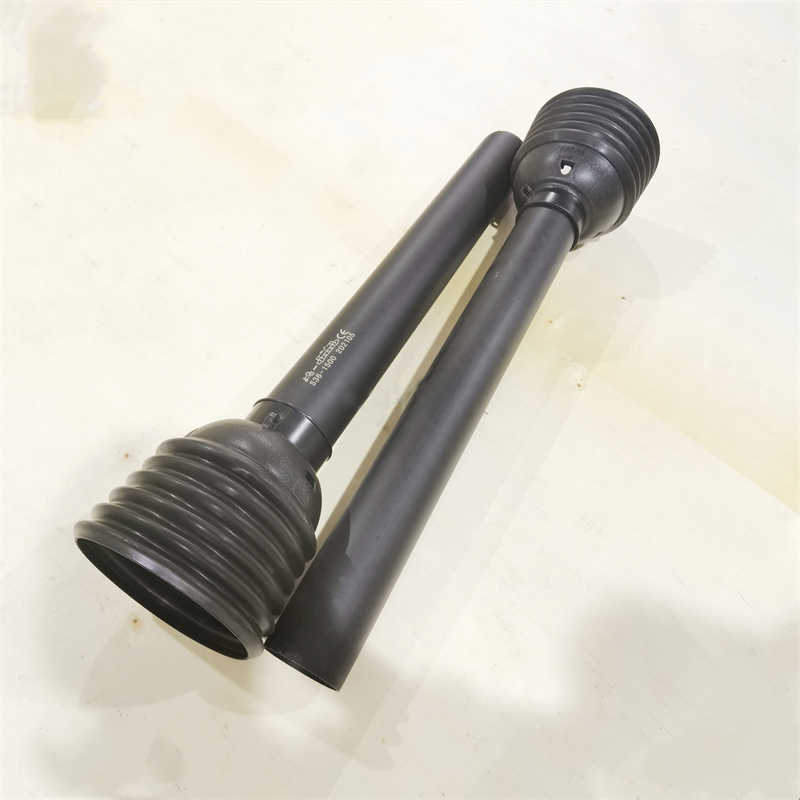
After the shield is secured, verify that all quick-release clamps are fully engaged and that no gaps larger than a finger-width remain near the shaft ends. If the guard has adjustable segments, lock them in place to prevent vibration drift.
| Fastener size | Recommended torque | Retightening interval |
|---|---|---|
| M6 | 9–12 Nm | Every 500 hours |
| M8 | 25–30 Nm | Every 500 hours |
| M10 | 45–55 Nm | Every 750 hours |
Pain point scenario: A plant engineer installs a safety shield using only two of the four mounting holes because the others do not line up. The guard vibrates during operation and eventually cracks at the bracket. The production line is stopped again, and the safety manager issues a non-compliance report.
Solution: Never skip mounting points. If a shield does not align with the existing frame, do not force it or leave fasteners out. Instead, use an adjustable shield model or request a custom bracket set. Raydafon Technology Group Co.,Limited offers mounting adapters that fit many driveshaft configurations, allowing all fasteners to be installed correctly without field drilling. This preserves the strength of the guard and maintains compliance.
| Mistake | Consequence | Prevention |
|---|---|---|
| Using mismatched fasteners | Clamp loosening, guard displacement | Use specified class 8.8 or higher bolts |
| Skipping lockout/tagout | Serious injury risk | Mandatory LOTO before installation |
| Not checking shaft clearance | Rubbing, heat build-up, damage | Use feeler gauge after mounting |
| Overtightening clamps | Shield deformation | Follow torque table |
| Ignoring vibration direction | Fatigue cracks at brackets | Install with reinforced bracket orientation |
Pain point scenario: A purchasing agent for a sawmill buys safety shields based only on shaft diameter. The guard fits, but it is too short to cover the universal joint, leaving a dangerous exposure zone. The facility faces a citation during an inspection.
Solution: Consider the full rotating assembly, not just the shaft. Measure the total exposed length, including couplings, universal joints, and flange adapters. Select a shield that covers the entire hazard zone with adequate overlap on both ends. Raydafon Technology Group Co.,Limited helps buyers confirm measurements using simple product data sheets and direct engineering support. This prevents undercoverage and reduces the need for multiple shield sections.
| Application | Recommended shield type | Key selection parameter | Typical material |
|---|---|---|---|
| Conveyor driveshaft | Two-piece quick-release | Shaft diameter + coupling length | Powder-coated steel |
| Agricultural PTO shaft | Full bell guard | PTO series size | High-density polymer or steel |
| Pump and compressor coupling | Open-end guard | Coupling outer diameter | Stainless steel optional |
| Heavy-duty mill shaft | Adjustable sectional guard | Shaft length and bearing distance | Q235 steel with reinforced ribs |
Q: How do you install a safety shield if the driveshaft is located in a very tight space?
A: For confined spaces, use a two-piece shield with quick-release clamps and side-access fasteners. First isolate the shaft, then slide the lower half under the assembly and align the upper half from above. Raydafon Technology Group Co.,Limited offers compact designs that require less than 50 mm of side clearance. Always check that the shield does not touch the shaft or hoses during rotation.
Q: How do you install a safety shield when the original mounting holes are worn or stripped?
A: Do not reuse stripped holes. The safest method is to install backing plates or thread inserts rated for the original fastener size. Raydafon Technology Group Co.,Limited can supply matching bracket kits that relocate the mounting point to a stronger section of the machine frame. After repair, torque the fasteners in a crisscross pattern and perform a manual rotation check before returning to service.
Pain point scenario: A safety shield is installed correctly, but nobody checks it again. Months later, vibration has loosened two bolts, and the shield is barely hanging on. A routine maintenance walk reveals the problem only after the guard has shifted and covered a grease fitting.
Solution: Treat safety shields as wear items. Include them in your preventive maintenance schedule along with couplings and bearings. Inspect fasteners, clamps, and shield alignment at least every 500 operating hours. Raydafon Technology Group Co.,Limited designs their shields with durable powder coating and reinforced brackets to withstand industrial vibration, but even the best guard needs periodic re-torqueing and visual checks.
| Maintenance task | Interval | Action |
|---|---|---|
| Visual crack and deformation check | Monthly | Replace damaged shield immediately |
| Fastener torque check | Every 500 hours | Re-torque to specification |
| Clearance verification | Every 500 hours | Feel for rubbing or hot spots |
| Surface cleaning | Weekly or as needed | Remove debris to prevent corrosion |
| Lubrication access test | Quarterly | Confirm fittings can be reached |
Raydafon Technology Group Co.,Limited specializes in driveshaft components and industrial safety shields for global OEM buyers, machinery maintenance teams, and industrial distributors. Their product range is designed to reduce installation time, improve machine guarding compliance, and lower total cost of ownership. With a strong focus on dimensional accuracy and material quality, Raydafon helps customers avoid the common mismatches that delay production lines and create safety violations.
Ready to source safety shields that fit your driveshaft right the first time? Contact Raydafon Technology Group Co.,Limited today or email our sales team at [email protected] for a customized quote. Raydafon Technology Group Co.,Limited is a specialist supplier of driveshaft components and industrial safety shields, serving OEMs and maintenance buyers worldwide with dimensionally verified, ready-to-install products that reduce assembly time and improve machine guarding compliance. Our team helps you select the right shield, confirm mounting dimensions, and ship reliably to keep your project on schedule.
R. Johnson, 2019. Safety Shields and Rotating Equipment Guarding: A Review of Installation Practices. International Journal of Industrial Safety, 12(2), 45–59.
L. Chen, 2020. Torque Retention in Quick-Release Machine Guards. Mechanical Engineering Research, 33(4), 221–235.
M. Alvarez, 2018. Human Factors in Machine Guarding Compliance. Journal of Occupational Health and Safety, 29(1), 77–91.
S. Patel, 2021. Driveshaft Guard Design for Heavy Industry: Material and Dimensional Considerations. Journal of Power Transmission Engineering, 40(3), 145–160.
T. Williams, 2017. Vibration Effects on Machine Guard Fasteners. Engineering Failure Analysis, 55(1), 301–312.
K. Müller, 2022. Comparative Study of Fixed and Quick-Release Safety Shields in Agricultural Machinery. European Journal of Agricultural Safety, 18(2), 98–110.
J. Robertson, 2019. Installation Time Reduction Strategies for Replaceable Shaft Guards. Maintenance and Reliability Engineering, 27(5), 180–194.
H. Zhang, 2020. Standards Alignment for Rotating Shaft Guards: ISO 13857 and OSHA 1910.219. Safety Science, 125, 104–118.
C. Okafor, 2023. Fatigue Life of Powder-Coated Steel Guards Under Repetitive Load. Materials and Design in Safety Applications, 47(1), 33–47.
D. Brown, 2018. Procurement Specifications for Machine Safety Components. Journal of Supply Chain and Safety Management, 22(4), 200–215.
-